
A good second hand jacket can get you far better kit than your budget would otherwise stretch to. It can also get you someone else’s problem. The difference is usually ten minutes of looking properly before you hand over any money.
Where to buy pre-owned ski wear
Brand-run resale and refurbished schemes are the safest bet, because the kit has been inspected, cleaned and often repaired before it goes back on sale. Ski club swaps, end of season sales and reputable online marketplaces can turn up real bargains, but the checking is down to you. Dope Snow Renewed and Arc’teryx ReBIRD™ are two brand schemes that resell pre-owned kit after it has been checked and, where needed, repaired.
Brand spotlight
Dope Snow Renewed: second hand, checked and graded
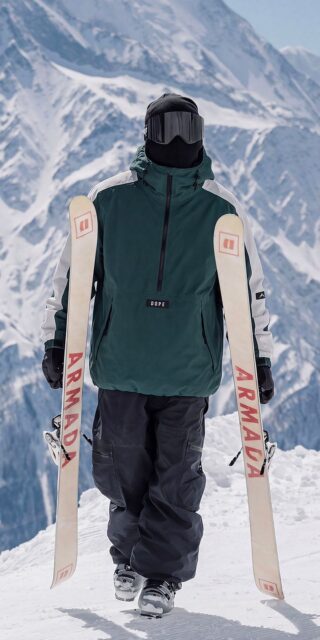
Second-hand ski clothing has changed considerably.
Not so long ago, buying a used jacket often meant taking your chances at a ski swap, scanning marketplace listings or trying to work out from a few photographs whether a shell had been lightly worn or had spent five winters being dragged around the mountains.
There is still plenty of that about, of course, but more structured resale programmes are beginning to make buying pre-owned technical clothing a much easier proposition.
Dope Snow has been developing that idea through its Renewed programme since 2021.
Returned and pre-owned garments are checked, cleaned and repaired where necessary before being offered for sale again. They are then graded as Great, Good or Pre-loved, giving buyers a clearer idea of condition before they commit.
In Europe, the programme works with recommerce specialist RecoMended.
That grading matters because technical ski clothing does not need to look perfect to have plenty of life left in it.
A shell can carry marks, scuffs and signs of previous use while still performing exactly as intended. Equally, a garment that looks tidy in a photograph may have wear in places that are harder to spot, which is why some kind of structured assessment helps take a little of the guesswork out of buying second hand.
It also makes us think differently about what gives ski clothing value.
We tend to focus on the moment a jacket is bought new: the price, the specification, the fit, the membrane, the pockets and how it feels on the first day out. But a well-made piece of outerwear may have a useful life far beyond its first owner.
People move things on for all sorts of reasons. The fit changes, tastes change, a different jacket gets more use or the original owner simply fancies something new.
None of that means the garment itself is done.
A jacket that has already seen one or two winters may still have years of skiing ahead of it, and for the next owner the fact that it is not from the latest collection may matter far less than whether it is clean, sound and correctly described.
There is a practical value argument too.
Buying second hand can open up technical outerwear at a different price point, but the more interesting point is that it keeps useful kit in circulation for longer.
That is where programmes such as Renewed become useful. They give older clothing another route back to the mountain and, just as importantly, give buyers a clearer idea of what they are actually getting.
A ski jacket does not stop being useful because someone else wore it first.
If it still fits, still protects and still has plenty of days left in it, there is every reason for it to carry on skiing.
FIND OUT MORE:
Dope Snow Renewed UK shop
What should you check on a second hand ski jacket?
If you can, see it in person and in good light. If you’re buying online, ask for close-up photos of each of these.
- Seam tape. Turn the jacket inside out. The tape over the seams should be flat and fully stuck down. Peeling, bubbling or lifting edges, especially at the shoulders and hood, are a warning sign.
- Delamination. Look and feel for bubbles, crinkling or patches where the inner layer has separated from the outer fabric. Small and localised can sometimes be lived with. Widespread is a no.
- Abrasion. Check the cuffs, hem, shoulders, elbows and the inside of the lower legs on trousers. Shiny, thin or fuzzy patches mean the fabric has worn.
- Zips. Run every zip end to end, including the pit zips and pockets. Look for missing teeth, a slider that slips open, or a main zip that needs forcing.
- Hardware and trims. Cord locks, toggles, hook-and-loop tabs, powder skirt poppers and hood adjusters. All fixable, but all add up.
- Smell and stains. A musty smell can mean it was stored damp. Most stains wash out, but sun cream and oil marks around the collar can be stubborn.
- Water test. If the seller doesn’t mind, sprinkle water on the shoulders. Beading is good. Soaking straight in means it needs a reproof at the very least.
- Size label and care label. Check they’re both still there and readable, so you know the size and how to look after it.
The takeaway
Graded, cleaned and repaired kit costs less and keeps it in use. Dope Snow Renewed’s Great, Good and Pre-loved grades are a good example of how that takes the guesswork out. Elsewhere, no jacket is perfect second hand, and it doesn’t need to be. Factor the cost of any wash, reproof or small repair into what you’re willing to pay.
Frequently asked questions
Where can I buy a second hand ski jacket?
Brand-run resale schemes such as Dope Snow Renewed and Arc’teryx ReBIRD are the safest bet, because the kit has been checked and graded. Online marketplaces and pre-season kit swaps are good too, as long as you look it over properly.
What should I check on a second hand ski jacket?
Look at the seam tape on the inside, check for bubbling or peeling that suggests delamination, test every zip, and inspect the cuffs, shoulders and hem, where wear shows first.
Is a second hand ski jacket still waterproof?
It can be. A used jacket that seems tired often just needs a wash and a reproof. If there’s widespread delamination or lifted seam tape, walk away.
Keep reading in Buy Less, Ski More