
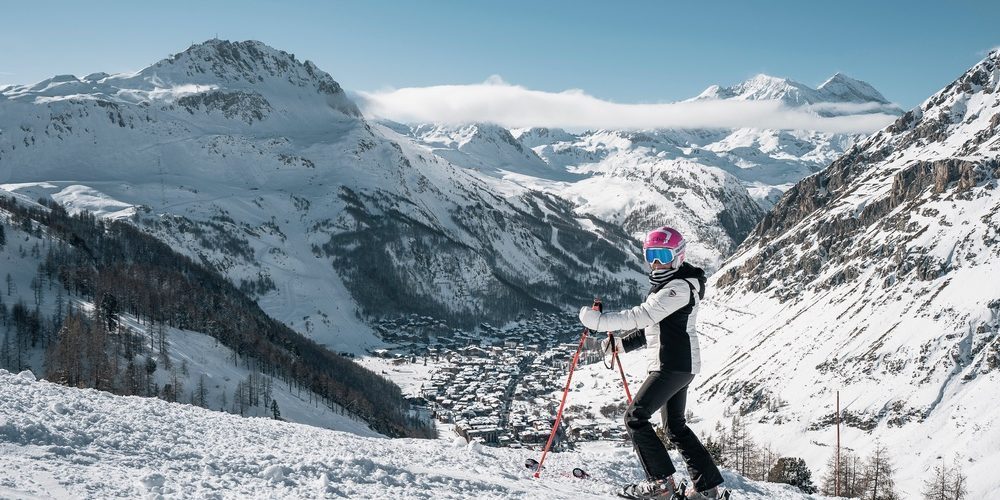
Europe has no shortage of great ski resorts. Some are tiny mountain villages where life still revolves around the arrival of the train each morning. Others are vast lift-linked domains stretching across multiple valleys and even international borders. Some attract expert skiers chasing powder and challenging terrain, while others have built their reputation on family-friendly slopes, long sunny lunches and the simple pleasure of cruising perfectly groomed pistes.
Which is why choosing the best ski resorts in Europe is never straightforward. The right resort for a family travelling with young children is unlikely to be the same one chosen by a group of powder hunters or a couple looking for mountain charm and good food. Snow reliability matters enormously to some skiers. Others are looking for atmosphere, scenery or simply a place they know will deliver a memorable week, whatever the weather decides to do.
What follows is not so much a ranking as a celebration of the resorts that consistently stand out. Some are famous, some less so, but all have earned their place through a combination of great skiing, character and the ability to make people want to come back.
Our Quick Picks
Best for Families: Les Gets
Best for Beginners: La Plagne
Best for Intermediate Skiers: Val Gardena
Best for Experts: Verbier
Best for Snow Reliability: Zermatt
Best for Scenery: Wengen
Best for Après Ski: St Anton
Best Luxury Resort: St Moritz
Best Ski Resorts in France
France remains the heavyweight of European skiing. The scale alone is extraordinary, with huge linked ski areas, modern lift systems and enough high-altitude terrain to keep even demanding skiers occupied for weeks. But what France does particularly well is range. Some resorts are glamorous and polished, others are quietly traditional, and many combine serious skiing with villages that still feel surprisingly relaxed once the lifts close.
For families, France often makes ski holidays straightforward. For stronger skiers, it offers some of the most extensive lift-linked terrain in the world. And for beginners and intermediates, there are few places better for building confidence on long, well-groomed pistes.
The French Alps are also remarkably varied geographically. Resorts in the Tarentaise tend to offer high-altitude snow reliability and enormous ski areas, while places in the Portes du Soleil or Haute-Savoie often feel greener, more village-like and gentler in atmosphere.
What ties the best French resorts together is consistency. Good infrastructure, efficient lifts, excellent ski schools and an understanding that skiing is not only about vertical descent, but about the rhythm of an entire week in the mountains.
Val d’Isère
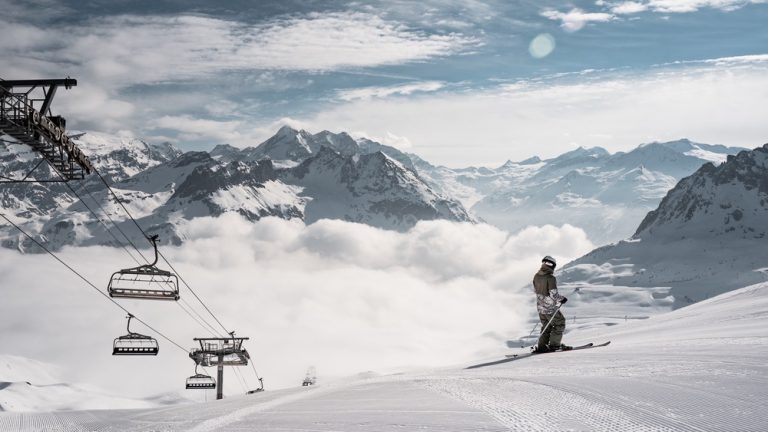
Val d’Isère has long been one of the greatest ski resorts in the Alps and, arguably, one of the most varied and complete anywhere in Europe. Linked with neighbouring Tignes, it forms the vast Tignes–Val d’Isère ski area, with more than 300km of pistes.
What sets Val d’Isère apart is the sheer diversity of its skiing. Strong skiers can spend the morning on the challenging steeps above Le Fornet or out on guided off-piste at the Pisaillas glacier, while intermediates have endless cruising above the high slopes of Solaise and Bellevarde without ever feeling they are repeating themselves.
For all its reputation among experts, Val d’Isère is also surprisingly kind to improvers. Convenient lifts and progressive terrain help beginners find their feet quickly, and miles of blue and red runs encourage them to push a little further from the nursery slopes each day.
The resort has grown more sophisticated since its days as an isolated mountain village, yet it has kept enough Savoyard character to avoid feeling manufactured. Village life still revolves around the skiing, though there are lively spots for après ski at La Folie Douce and in the centre of the resort.
What tends to stay with you, though, is the rhythm of the days here: sunrise over the Face de Bellevarde, long high-altitude lunches in the open air, and end-of-day runs dropping back into the village as the light catches the church tower.
Chamonix
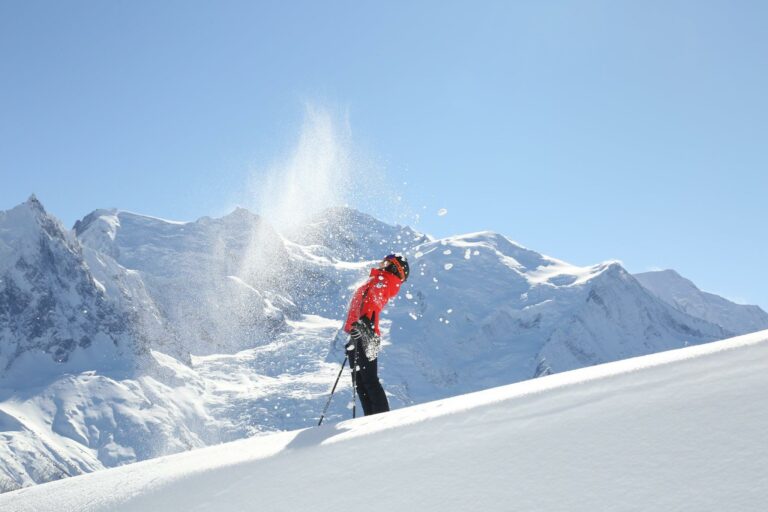
Few places in the Alps compare to Chamonix. It is not really a ski resort at all, but a true mountain town, with all the history and scenery that come with it.
The setting alone makes it worth visiting. Lifts rise straight out of the valley into high-mountain terrain, and the place retains the feel of a working town year-round rather than the manufactured atmosphere of some purpose-built resorts.
Skiing in Chamonix is not a single linked network but a series of distinct areas, each with its own character. Grands Montets is legendary for its challenging off-piste terrain, while Flégère offers some of the finest views in the valley, looking straight across to Mont Blanc.
Experts are spoilt here. The famous Vallée Blanche is celebrated not for being the steepest run in the Alps but for being one of the most memorable, a long descent through glacier terrain that tends to lodge itself permanently in the memory.
Chamonix offers far more than skiing, and with a little planning, families can have a wonderful time too. Non-ski days are easily filled, from museums and mountaineering history to shopping, cafés and spas.
This is one of the most atmospheric mountain towns anywhere, with a skiing heritage to match, and it makes for an unforgettable week in the French Alps.
Courchevel
Courchevel is often associated with luxury, Michelin-starred restaurants and some of the Alps’ most exclusive hotels, but focusing only on that misses the real reason it deserves a place among Europe’s best ski resorts. At its heart, Courchevel is simply an outstanding place to ski.
Part of the vast Three Valleys, the world’s largest lift-linked ski area, Courchevel gives skiers access to a huge interconnected network of pistes spread across several valleys and resorts. Yet despite that scale, it rarely feels overwhelming. The lift system is efficient, the piste map is surprisingly intuitive, and it is remarkably easy to spend an entire day exploring without ever feeling lost.
The skiing is particularly strong for intermediates. Wide, beautifully groomed pistes flow through forests and open bowls, while higher slopes around Saulire and Vizelle offer spectacular views across the surrounding mountains. It is the sort of resort where confident skiers can cover long distances in a day without constantly encountering difficult terrain.
Families are well catered for too. Excellent ski schools, modern infrastructure and a choice of villages mean Courchevel can be tailored to different budgets and holiday styles. While Courchevel 1850 attracts much of the attention, the lower villages of Courchevel Moriond (1650) and Courchevel Village (1550) offer a more relaxed atmosphere and often better value.
What many visitors appreciate most is how effortless it all feels. The lifts run smoothly, the mountain restaurants are consistently good, and the resort has a polished quality that lets ski days flow naturally from first lift to final descent.
For some, Courchevel will always be synonymous with luxury. For many skiers, though, it is simply one of the finest places in Europe to spend a week on skis.
La Plagne
© Olivier Allamand
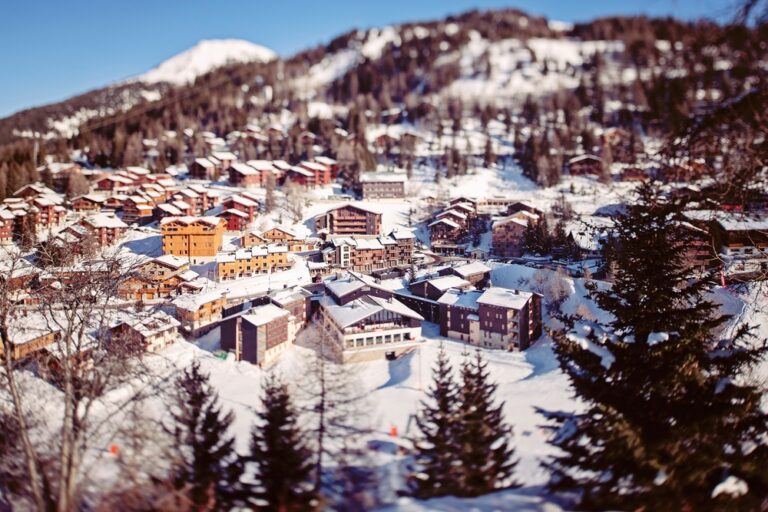
Some resorts do almost everything well yet never quite earn the reputation for it. La Plagne is one of them. Not as storied as Chamonix, nor as chic as Courchevel, it is the resort to choose for a relaxed, stress-free week built entirely around the skiing.
Together with Les Arcs, La Plagne forms the vast Paradiski area, ideal for beginners and intermediates. Its pistes are typically wide and well-maintained, giving skiers room to find their rhythm and build technique without ever feeling intimidated.
Families are particularly well served. Much of the accommodation is genuinely ski-in, ski-out, modern lifts make getting around painless, and the spread of villages means there is a base to suit most tastes, from convenient and purpose-built to quieter and more traditional.
Stronger skiers will not be bored either. The glacier above Bellecôte offers high-altitude terrain when you want it, and the link into Les Arcs opens up more than enough to fill a week. What La Plagne does best, though, is make comfortable, enjoyable skiing feel completely effortless.
Les Gets
Les Gets has an easygoing vibe that is hard to find in many other bigger ski towns of the Alps. Located in the vast Portes du Soleil ski area, this town strikes the right balance between offering great skiing and maintaining its charm as a mountain village.
That is perfect for intermediate and family skiers because the local slopes are easy to learn and fun to ski on. Meanwhile, advanced skiers can explore the whole of Portes du Soleil by going beyond Les Gets and enjoying a whole day of linked French and Swiss skiing.
The charming village of Les Gets adds much to the experience. Chalet-style buildings, the compact village centre, and the peaceful vibe make it a great destination for relaxing family vacations.
While the snow may not be reliable all the way to the end of the season in comparison to the highest Alps resorts, improvements in snowmaking have made a difference. On the other hand, after a good dump of fresh snow, tree-lined skiing offered here and in neighbouring Morzine is among the best in the Alps.
There are no particular highlights at Les Gets that set it apart from other ski destinations; it simply offers a great vibe and comfort.
Best Ski Resorts in Austria
Austria approaches skiing slightly differently from France. The ski areas are often less overwhelming in scale, but what Austria consistently delivers is atmosphere. Mountain huts are taken seriously, villages usually feel lived-in rather than purpose-built, and the rhythm of the ski day often revolves as much around hospitality as vertical descent.
That is not to say the skiing lacks ambition. Austria has some superb terrain, particularly for intermediates and advanced skiers, along with some of the Alps’ best lift infrastructure. But there is often a warmth to Austrian skiing that makes holidays here feel relaxed and sociable rather than relentlessly high-performance.
The country is also exceptionally strong for mixed-ability groups. Good ski schools, welcoming mountain restaurants and villages with genuine character make Austria particularly popular with returning skiers who value the overall experience as much as the size of the ski area itself.
St Anton
Nassereinbahn© TVB St. Anton am Arlberg Patrick Bätz
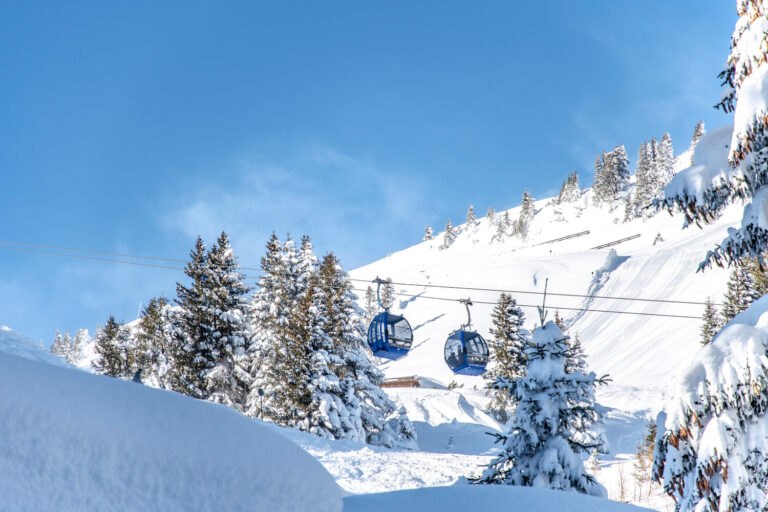
St Anton is one of the great names in Alpine skiing, and unlike some famous resorts, it fully lives up to its reputation. The skiing here feels serious from the moment you arrive. Steep slopes descend directly towards the village, off-piste routes seem to spread out in every direction, and there is a strong sense that the mountain still sets the terms rather than the resort.
Part of the vast Arlberg ski area, St Anton offers an enormous amount of terrain, much of it best suited to confident intermediates and advanced skiers. The skiing can feel relentless in the best possible way — long descents, challenging bumps, powder itineraries and mountain routes that leave legs burning by the end of the afternoon.
Yet what often surprises visitors is how beautiful the skiing can be for cruisers, too. Runs towards Zürs and Lech open into wide, rolling terrain with some of the Alps’ most scenic mountain views. On fresh snow days, the Arlberg remains one of Europe’s great powder destinations.
The village itself retains a slightly rougher edge than some polished Swiss or French resorts, and that is part of its appeal. Après ski is famously lively, particularly around the MooserWirt and Krazy Kanguruh, but St Anton still feels fundamentally like a resort built around skiing rather than nightlife.
For serious skiers, few places in Europe still generate quite the same loyalty.
Saalbach-Hinterglemm
Saalbach © MirjaGeh
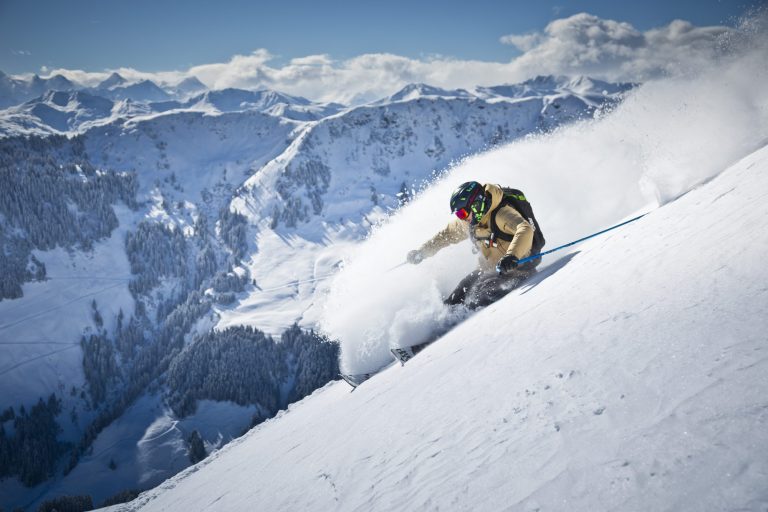
Saalbach Hinterglemm is one of the most complete all-round resorts in Austria. A string of mountains linked into the Skicircus offers such variety that many visitors barely repeat a run all week.
What makes it work so well is the flow. A modern, intelligently planned lift network lets skiers move between valleys without ever worrying about finding their way home, and intermediates in particular are spoilt: long, gently rolling reds, wide cruising pistes and enough variety to keep a full day interesting.
The layout suits mixed groups, too. Those after a challenge can head to Fieberbrunn for steeper, more demanding pistes, while everyone else has an abundance of comfortable reds across the rest of the region.
The villages strike a similar balance, busy without ever feeling overcrowded. Saalbach has the louder evenings and the livelier après ski, while Hinterglemm is calmer and more spread out. Either way the after-ski scene is distinctly Austrian: buzzing mountain huts, relaxed restaurants and a warm, welcoming ski culture.
For most visitors, it is that effortless, joined-up layout that lingers in the memory.
Ischgl
Ischgl is best known for its nightlife, but that reputation does it a disservice. This is one of the finest ski resorts in Austria, with reliable snow, a slick lift system and a genuinely extensive ski area. Plenty of visitors come for the party and leave pleasantly surprised by the skiing.
Most of the terrain sits above the tree line, which gives the place a real sense of scale. Intermediates are particularly well looked after, with long reds running through wide, open basins and along ridges that lead all the way to Switzerland. In good weather, the round trip over to Samnaun and back is one of the great day-long outings in the Alps.
After fresh snow, advanced skiers will find rewarding off-piste around Greitspitze and Palinkopf, though Ischgl remains, at heart, a high-altitude cruising resort.
It is a busy, polished operation. The lifts run efficiently and the accommodation is generally of a high standard. Ischgl is one of those resorts where good skiing is more or less guaranteed.
Serfaus-Fiss-Ladis
Serfaus credit Serfaus Fiss Ladis Tirol
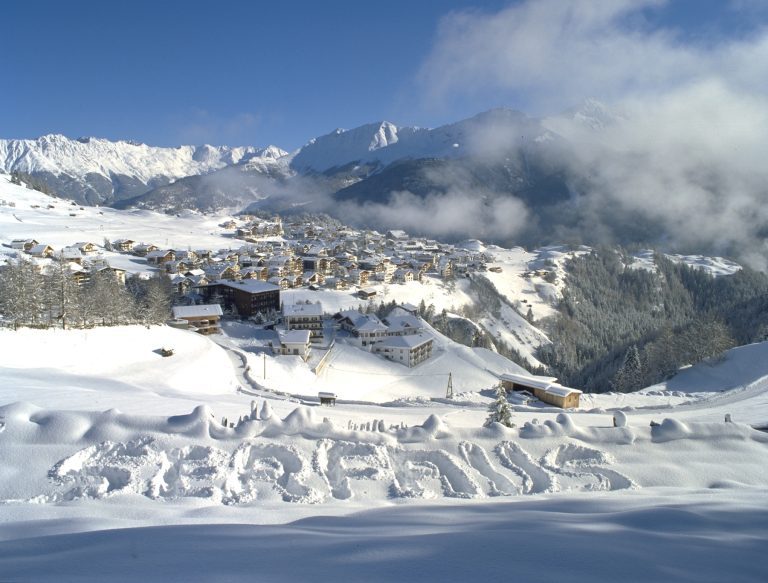
Serfaus-Fiss-Ladisis one of the great family resorts of the Alps, but it earns that label without short-changing stronger skiers. Rather than bolting a few nursery slopes onto a conventional ski area, the whole mountain has been designed with families in mind, beginners and experts alike.
The learning areas are exceptional: broad, well-thought-out beginner zones, gentle progression slopes and a child-friendly lift system that helps young skiers build confidence quickly. The ski instruction here is widely rated among the best in the Alps.
None of which means it is only for families. Alongside the long sweep of reds, advanced skiers will find genuinely challenging terrain and some rewarding off-piste.
For all its popularity, the resort never feels frantic, thanks to first-rate infrastructure and three contrasting villages. Serfaus is the liveliest base, while Fiss and Ladis keep a more traditional, low-key feel.
Serfaus-Fiss-Ladis is among the best resorts to ski with families.
Best Ski Resorts in Switzerland
Switzerland often feels slightly different from the rest of the Alps. Resorts tend to be more orderly, villages more traditional and mountain transport systems remarkably efficient. There is also a sense of permanence to many Swiss resorts — places that developed gradually over decades rather than being purpose-built in a single expansion boom.
The scenery is another major part of the appeal. Some of the Alps’ most recognisable mountains sit here, and skiing beneath peaks like the Matterhorn or the Eiger changes the atmosphere of an entire holiday. Even experienced skiers often stop simply to take in the view.
Swiss skiing is not usually the cheapest option, but the overall standard is consistently high. Trains connect mountain villages with impressive ease, lifts tend to run efficiently, and many resorts balance world-class skiing with villages that still feel genuinely lived-in rather than purely tourism-focused.
Zermatt
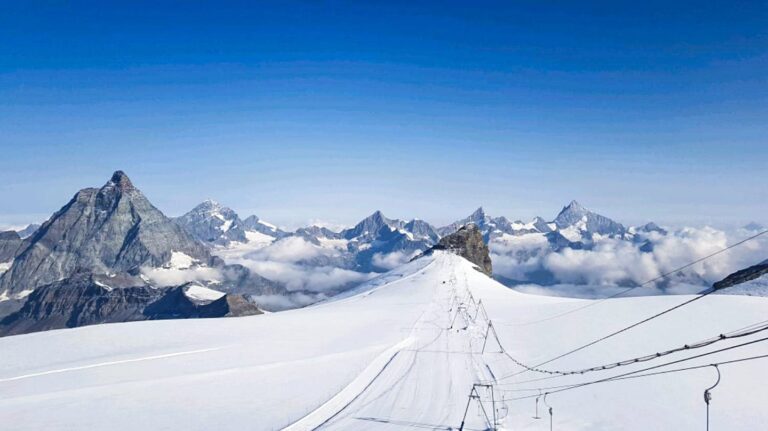
Few ski resorts in the world have a backdrop as instantly recognisable as Zermatt. The Matterhorn dominates almost every view and somehow never becomes ordinary, however many times you see it across a week.
The skiing more than lives up to the scenery. Linked with Italy’s Cervinia, the ski area offers extensive high-altitude terrain, long cruising runs, reliable snow and enough variety to keep most skiers busy for days. The broad pistes stretching across the glacier towards Italy are a particular pleasure for intermediates.
Much of Zermatt’s character, though, comes from the village itself. Completely car-free and reached by train, it feels calmer and more elegant than many major Alpine resorts. Electric taxis glide quietly through narrow streets, old timber chalets sit beside smart hotels, and the whole place feels both sophisticated and deeply rooted in mountain history.
Strong skiers still find plenty of challenge, especially once conditions open up the itineraries and off-piste, but Zermatt’s real brilliance lies in the overall experience: long lunches with Matterhorn views, genuinely dramatic high-mountain scenery, and a village where the evenings stay lively without tipping into chaos.
It is expensive, certainly, but few resorts combine scenery, skiing and atmosphere so successfully.
Verbier
Verbier has long been one of Europe’s classic resorts for strong skiers, and it still carries an unmistakable sense of mountain ambition. Set high above the Rhône Valley, it pairs demanding terrain with a lively village and some of the best lift-accessed off-piste in the Alps.
The wider 4 Vallées offers enormous scope, but the skiing is not always gentle. Many runs are steeper and more technical than in the big French cruiser resorts, which is exactly what experienced skiers love about it. Powder days here are the stuff of legend, especially around Mont Fort and the back bowls beyond Attelas.
Verbier is not only about experts and off-piste culture, though. Confident intermediates can have superb weeks here once they learn to read the mountain; the views across the surrounding peaks are spectacular, and there is a sense of scale that feels distinctly Swiss.
The village has grown into one of the Alps’ major social hubs. Restaurants, bars and terraces stay busy well into the evening during peak weeks, yet Verbier still feels rooted in skiing and mountain life rather than luxury tourism.
For skiers who want demanding terrain, a lively atmosphere and world-class off-piste, Verbier remains one of Europe’s benchmark resorts.
Wengen (Jungfrau Region)
JungfrauRegion ST
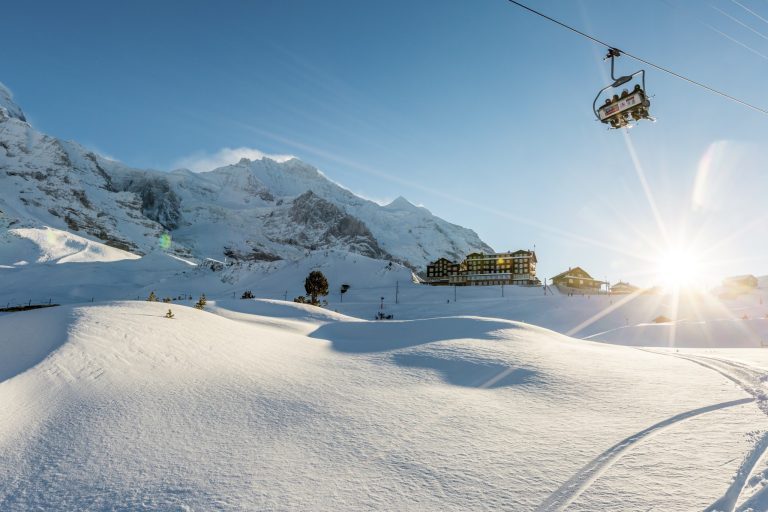
Wengen feels increasingly rare in the modern Alps. Perched on a sunny terrace high above the Lauterbrunnen Valley and reached only by mountain railway, it remains one of the few major ski resorts where arriving is still part of the experience. There are no cars, no busy roads and very little sense of hurry. Instead, visitors step off the train into a village that feels as though it belongs in the mountains rather than having been built for tourism.
The wider Jungfrau ski area, which links Wengen with Grindelwald and Mürren, offers some of the most spectacular scenery anywhere in skiing. The Eiger, Mönch and Jungfrau dominate the skyline, and even seasoned skiers often find themselves stopping simply to admire the view.
The skiing suits intermediates particularly well. Long red and blue runs descend through dramatic mountain landscapes, while beginners benefit from excellent learning areas and ski schools. More advanced skiers can tackle the famous Lauberhorn World Cup downhill route, although most will discover it feels considerably steeper when standing at the start gate than it does on television.
Above all, it is the atmosphere that lingers. Families love the safety and simplicity of the car-free village, while couples and returning skiers warm to the traditional Swiss character that has survived modern development largely intact. It is neither the most fashionable resort in the Alps nor the largest, but it is one of the most enjoyable places to spend a week in the mountains.
St Moritz
Few names in skiing carry the same recognition as St Moritz. The resort has hosted two Winter Olympics, helped invent winter tourism as we know it, and still draws visitors from around the world. Yet behind the glamour lies a ski destination that first-time visitors often underrate.
The skiing spreads across several areas, including Corviglia, Corvatsch and Diavolezza, with far more variety than newcomers expect. Corviglia, directly above the town, is especially good for intermediates, its beautifully groomed, wide-open pistes made for relaxed cruising. The area also enjoys an enviable amount of sunshine, which makes for some of the most pleasant long-lunch skiing in the Alps.
The town feels unlike almost anywhere else in Europe. Elegant hotels overlook the frozen lake, luxury boutiques sit alongside traditional Engadin buildings, and there is a sense of history at every turn. For all its reputation, St Moritz is not the preserve of the ultra-wealthy: away from the famous hotel terraces, many visitors find a surprisingly welcoming resort with excellent public transport and an unhurried pace.
Perhaps more than anywhere else in Switzerland, St Moritz pairs skiing with a wider mountain lifestyle. Whether it is a winter walk around the lake, polo or horse racing on the ice, or simply soaking up the atmosphere of the Engadin, there is always something happening beyond the slopes.
For sunshine, immaculate pistes and genuine Alpine history, St Moritz remains in a class of its own.
Best Ski Resorts in Italy
Italy approaches skiing a little differently from its Alpine neighbours, and that is much of the attraction. The skiing can be superb, but the experience feels more relaxed. A long lunch is treated as an essential part of the day rather than a guilty pleasure, mountain restaurants take their food seriously, and villages feel lived-in rather than purpose-built.
The scenery helps. Much of Italy’s best skiing sits in the Dolomites, where dramatic limestone peaks create some of the most recognisable mountain landscapes on earth. Even skiers who have spent years exploring France, Austria and Switzerland find themselves stopping to take it in.
What Italy does best, perhaps, is pair excellent skiing with an easy-going atmosphere. Resorts are welcoming, lift systems modern, and there is a sense that the holiday is about more than racking up kilometres of piste. For a lot of visitors, that balance is exactly why they keep coming back.
Val Gardena
© Val Gardena
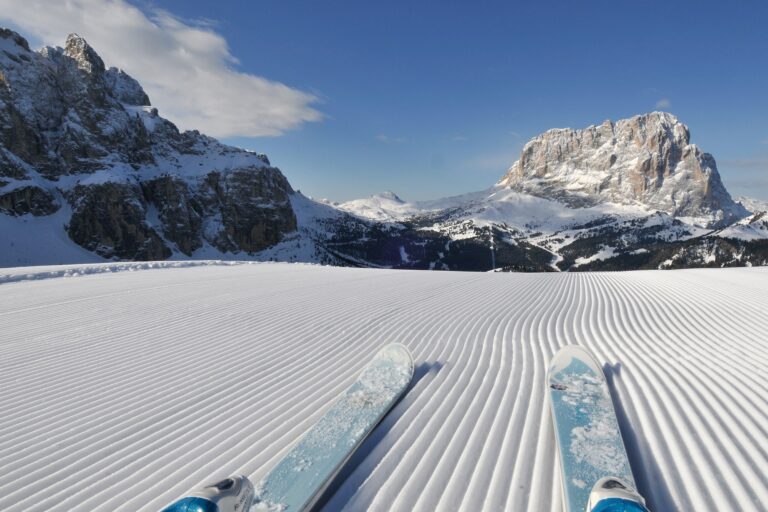
If one resort captures the very best of Italian skiing, it is probably Val Gardena. Set in the heart of the Dolomites and linked directly into the vast Dolomiti Superski network, it combines spectacular scenery with some of the most enjoyable intermediate skiing anywhere in Europe.
The three villages of Ortisei, Santa Cristina and Selva each have their own character, but all provide easy access to an enormous ski area that seems designed for exploration. This is not a resort where you spend the week repeating the same runs. Instead, every day tends to become a journey, whether that means completing the famous Sella Ronda circuit or simply following a series of perfectly groomed pistes through one stunning valley after another.
The skiing particularly suits intermediates. Long red and blue runs flow naturally between mountain restaurants and lift stations, encouraging skiers to keep moving rather than constantly checking maps. Stronger skiers have plenty to enjoy too, especially around nearby Seceda and Ciampinoi, but Val Gardena’s greatest strength is how effortlessly enjoyable the skiing feels.
Then there is the scenery. The jagged peaks of the Dolomites catch the light in remarkable ways, particularly early and late in the day, and even long-time visitors rarely stop appreciating it. Add excellent food, welcoming mountain huts and villages that still feel genuinely South Tyrolean, and it is easy to understand why so many skiers consider Val Gardena the complete package.
Cortina d’Ampezzo
Cortina has always held a special place in Alpine skiing. Long before resorts became international brands, it was drawing visitors with its extraordinary setting and elegant mountain atmosphere, and it remains one of the most beautiful ski towns in Europe.
Unlike resorts where the village exists mainly to service the lifts, Cortina feels like a genuine town. Smart cafés line the pedestrian centre, locals and visitors mix easily, and there is a depth of history that newer resorts struggle to match.
The skiing itself is often underrated. Cortina may not match the sheer scale of the big French mega-resorts, but it offers a wonderfully varied spread of pistes across several sectors. Intermediates do especially well, with wide, immaculate slopes and some of the finest views in the Alps; on a clear day, skiing beneath the towering Tofane is genuinely memorable.
What visitors tend to love most is the pace. Lunch is never rushed, mountain restaurants are destinations in their own right, and there is a shared understanding that skiing well sometimes means stopping to enjoy where you are.
As co-host of the Milano-Cortina 2026 Winter Olympics, Cortina finds itself back in the spotlight, and it feels every bit as relevant as it did decades ago. It remains one of the great names in European skiing for good reason.
Kronplatz
Kronplatz is rarely the first Italian resort that springs to mind, yet many who visit wonder why they left it so long. Rising above the Puster Valley, it offers something surprisingly hard to find in the Alps: simplicity.
The ski area centres on a single broad mountain with pistes radiating in every direction. It sounds basic, and that is precisely why it works. Navigation is easy, the lift connections are logical, and you spend more time skiing and less time puzzling over how to get from one side of the resort to the other.
The slopes are the real highlight. Immaculately groomed and often remarkably quiet next to better-known names, they are made for intermediates who love carving long turns on wide pistes. The steeper runs back to the valley floor, including the Black Five descents, give advanced skiers something to test themselves on.
As with much of the region, the wider experience matters here. South Tyrolean culture blends Austrian and Italian influences into excellent food, attractive villages and a relaxed atmosphere that feels distinct from the rest of the Alps.
It may lack the international profile of its famous rivals, but as an all-round ski destination, Kronplatz consistently punches above its weight.
Livigno
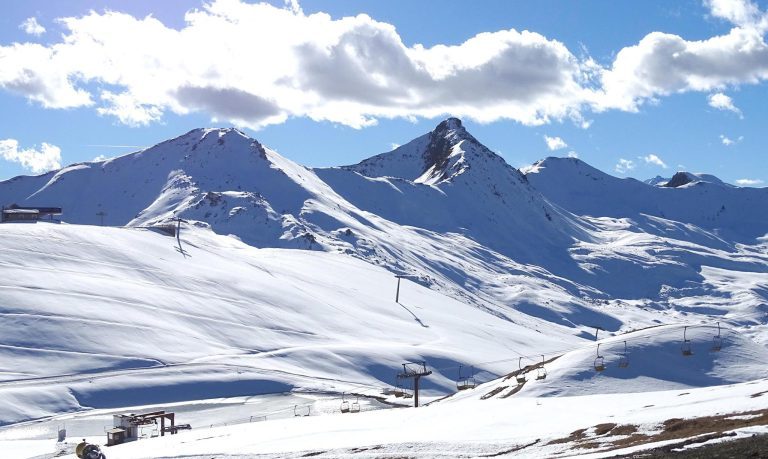
Livigno holds a unique place in European skiing. High in a remote valley near the Swiss border, it feels a little set apart from the rest of the Alps, and that independence has shaped its character.
Its altitude gives it an enviable snow record, while its long-standing tax-free status has always drawn value-conscious visitors. Yet Livigno has grown into far more than a bargain destination.
The skiing spreads across two mountains facing each other across the valley, an arrangement that works beautifully for families, beginners and intermediates. The pistes are generally wide and confidence-building, making this a fine place to sharpen technique while still covering plenty of ground.
There is a youthful energy to Livigno that sets it apart from more traditional resorts. Restaurants, cafés and bars stay busy through the season, and the town has built a lively atmosphere without losing its mountain identity.
For families, the appeal is obvious: accessible skiing, an easy-to-navigate village and plenty to do off the slopes. Stronger skiers, meanwhile, have good off-piste nearby and increasingly sophisticated facilities.
What keeps people coming back, though, is the value. Livigno delivers a great deal of skiing, excellent snow and a thoroughly enjoyable mountain holiday at a price that often compares well with the Alps’ biggest names.
So Which Is Europe’s Best Ski Resort?
The honest answer is that there probably isn’t one.
The skier who falls in love with Verbier’s steep terrain and off-piste possibilities may have little in common with a family enjoying a relaxed week in Les Gets. Someone who values mountain history and atmosphere may choose Chamonix every time, while another skier might happily trade that for the endless lift-linked terrain of Val d’Isère or the sunshine and scenery of the Dolomites.
Perhaps that is what makes skiing in Europe so special. Within a few hours of each other sit resorts offering completely different experiences, yet all capable of delivering a memorable week in the mountains.
The best ski resort is rarely the one with the biggest statistics or the most famous name. More often, it is the place that matches the kind of holiday you are looking for. For some that means powder-filled days in the Arlberg, for others it is family skiing in the Portes du Soleil, lunch beneath the Matterhorn, or exploring the Dolomites under some of the most beautiful mountain scenery on earth.
What Europe offers better than anywhere else is variety. Whether you are skiing for the first time, planning a family holiday, chasing fresh snow or simply looking for a great week in the mountains, there is a resort here that will feel as though it was made for you.
And the good news is that however many ski holidays you have already enjoyed, there is always another mountain, another valley and another resort waiting to become your new favourite