
Accommodation

Quick answer: Killington suits UK skiers wanting an easier East Coast transatlantic flight, families, intermediates, and anyone wanting the longest ski season in the eastern United States thanks to extensive snowmaking. It is less suited to powder purists, since Killington relies heavily on snowmaking and can see icier, more variable conditions than the deep, dry snow of the Rockies.
Quick resort facts
Ski area: Killington, 212 pistes/155 trails, 22 lifts · Altitude: 355m base · Season: October to May · Nearest airport: Boston (257 miles) · Average annual snowfall: 635cm
Best for: UK skiers wanting an easier East Coast transatlantic flight, families, intermediates, and anyone wanting the longest ski season in the eastern United States thanks to extensive snowmaking.
Not for: powder purists. Killington relies heavily on snowmaking and can see icier, more variable conditions than the deep, dry snow of the Rockies.
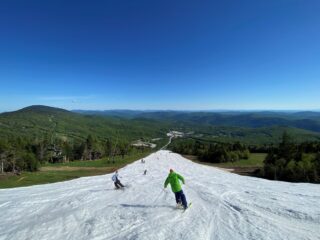
Killington is the largest ski resort in the eastern United States, spread across six interconnected peaks in central Vermont and long nicknamed the “Beast of the East”. Owned by Powdr Corp, it is known for its sheer scale, the biggest snowmaking system in the eastern US, and one of the longest seasons anywhere in North America, often running from October into early June. The resort’s nickname reflects both its scale and its famously long, hard-fought season, with Killington often the first Vermont resort to open and among the last to close each year.
Jump to: Ski Area · Skiing by Ability · Snow & Best Time to Go · Lift Passes · Getting There · FAQs
Killington also hosts an annual women’s World Cup slalom and giant slalom each November, and its scale makes it a genuine week-long destination rather than a single-mountain day trip, an appealing option for UK visitors looking for a shorter, more affordable East Coast flight than Colorado or Utah. The event draws a genuinely festival-like crowd to Killington each November, adding a unique early-season buzz rarely seen at other East Coast resorts.
Killington covers around 1,509 acres across 155 trails, served by 22 lifts. The base sits at 355m (1,165ft), rising to 1,293m (4,241ft) at the summit, Vermont’s second-highest peak, a vertical drop of 930m (3,050ft), the largest in New England. Terrain splits roughly 28% beginner, 33% intermediate and 39% advanced or expert. Snowdon in particular offers a good mix of terrain for intermediate families, while Skye Peak connects several of the resort’s longer, more varied trails.
The resort spans six peaks, Killington Peak, Skye Peak, Bear Mountain, Ramshead, Snowdon and Sunrise, linked by an extensive lift and trail network. Bear Mountain is known for its steep bump runs and terrain parks, while Ramshead and Snowdon offer gentler beginner and family-friendly terrain. Getting to know the connections between the six peaks takes a little time on a first visit, and picking up a trail map at the base is genuinely useful for navigating the resort’s scale.
Ramshead and Snowdon both offer gentle, well-groomed learning terrain served by their own lifts, making them the natural base for first-timers and families. Dedicated ski school meeting points at both base areas make it straightforward for families to get organised each morning without crossing busier terrain.
Killington Peak and Skye Peak provide long, well-groomed cruising runs, including the famous Juggernaut trail, one of the longest in the eastern United States at around 6.5 miles. The Snowshed and Rams Head lifts also serve reliably groomed intermediate terrain, useful on busier days when Killington Peak’s runs draw bigger crowds.
Bear Mountain is the resort’s steepest and most challenging area, with sustained bump runs and terrain parks that regularly host competitive events. Outer Limits, one of the steepest and longest mogul runs in the eastern United States, is a particular rite of passage for visiting expert skiers.
Killington’s natural snowfall is more modest than the Rockies, but its industry-leading snowmaking system, the largest in the eastern US, keeps trails open reliably from October through into late spring. January and February bring the coldest temperatures and best natural snow, while March offers longer days and generally softer conditions. Killington’s snowmaking investment means it can often open trails weeks before natural snowfall would otherwise allow, a key part of its reputation for one of the longest seasons in the country.
Killington is part of the Ikon Pass and Ikon Base Pass network, alongside its own standalone lift tickets and season passes shared with sister resort Pico Mountain. Booking online ahead of travel brings significant savings over walk-up prices. Ikon Base Pass holders should check current blackout dates carefully, as access during the busiest Christmas and Presidents’ Week periods can be restricted.
The Killington Ski and Ride School offers group and private lessons across all six peaks, with dedicated children’s programmes based at Ramshead and Snowdon. Rental shops are widely available at the base areas and in nearby Killington village. Specialist bump and steep-terrain clinics are also offered for stronger skiers wanting to tackle Bear Mountain’s runs with better technique.
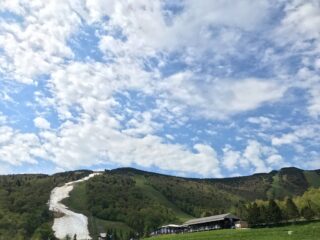
Killington has a wide range of slopeside hotels and condos, plus a scattered village of independent lodges, motels and restaurants along Killington Road, giving visitors more budget flexibility than many purpose-built western resorts. Booking well ahead is advisable for the busy Christmas, New Year and Presidents’ Week periods, when Killington Road’s lodging can sell out quickly.
Killington Road is home to a lively, if spread-out, collection of bars and restaurants, with a well-earned reputation for some of the best après-ski nightlife in the eastern United States. The Wobbly Barn and other long-standing Killington Road institutions have built a loyal following over decades, giving the resort a genuinely distinct après culture.
Killington offers snow tubing, ice skating and an extensive children’s ski school, plus access to charming Vermont towns nearby for those wanting a break from the slopes. Its long season also makes it popular for spring skiing trips well into late April and May. Nearby Woodstock and Rutland offer classic Vermont small-town charm for visitors wanting to explore beyond the resort itself on a rest day.
Most UK visitors fly into Boston Logan International Airport and drive around two and a half hours north west to Killington. Albany International Airport in New York State offers a slightly closer alternative, around two hours away by road. A hire car is strongly recommended given Killington’s spread-out layout along Killington Road, since public transport options in the area are limited.
| Pros | Cons |
|---|---|
| Largest ski area in the eastern United States | Snow quality relies heavily on snowmaking |
| Shorter, often cheaper flight from the UK via Boston | Less natural snow and lower altitude than western resorts |
| One of the longest ski seasons in North America | Lodging and dining spread out along Killington Road |
| Lively, well-regarded après-ski scene | A car is genuinely useful to get around efficiently |
Killington makes an excellent case for an East Coast ski trip: a genuinely large, varied ski area, a long season backed by serious snowmaking, and a shorter, often cheaper flight from the UK than the Rockies or Utah. It won’t match Colorado for natural powder, but for value, convenience and sheer scale within New England, the Beast of the East is hard to beat. Add in one of the liveliest après scenes on the East Coast and a season that regularly stretches from autumn into early summer, and it’s easy to see why Killington keeps its Beast of the East reputation.
Yes. Ramshead and Snowdon both offer dedicated, well-groomed beginner terrain served by their own lifts.
Fly into Boston Logan International Airport and drive around two and a half hours north west, or use Albany International Airport in New York State as a slightly closer alternative.
Killington is part of the Ikon Pass and Ikon Base Pass network, alongside its own standalone lift tickets.
The nickname reflects its scale: Killington is the largest ski resort in the eastern United States, spread across six interconnected peaks.
Thanks to extensive snowmaking, Killington often runs from October into early June, one of the longest seasons in North America.
930m (3,050ft), the largest vertical drop of any resort in New England.
Get all the latest ski news, gear reviews, snow reports and unmissable features direct to you inbox with our weekly ski update.