Accommodation

Quick answer: Bansko suits budget-conscious skiers wanting modern lift infrastructure at low prices, those wanting a genuine historic Bulgarian town with a lively traditional mehana and bar scene, and intermediates keen to ski one of Europe’s longest runs. It is less suited to those seeking a vast, high-Alpine ski area or a quiet, low-key atmosphere.
Quick resort facts
Ski area: around 56km of piste, 14 lifts (4 drag, 9 chair, 1 gondola) · Altitude: base 1,000m · Longest run: 16km · Nearest airport: Sofia (170km) · Season: December to April
Bansko was Eastern Europe’s big ski boom story of the 2000s: an unspoilt, historic Bulgarian town at the foot of the Pirin mountains, transformed by heavy investment in modern lifts, hotels and property that rapidly brought it to international prominence. The Pirin National Park surrounding the resort is a UNESCO World Heritage Site, adding genuine natural grandeur to the backdrop. The scale of investment during the 2000s boom was genuinely transformative, turning a quiet mountain town into one of the most talked-about ski destinations in Eastern Europe within the space of a decade.
The resort is best known among skiers for its 16km run from the top of the gondola down to the town – one of the longest continuous pistes in Europe – and for a rich cultural history that saw it named Bulgaria’s best ski resort in 2018. The old town retains cobbled streets and traditional architecture largely untouched by the modern lift infrastructure above it.
Jump to: Ski Area · Skiing by Ability · Snow Reliability · Lift Passes · Getting There · FAQs
Terrain split: gentle nursery slopes near the mid-station for beginners; broad, well-groomed cruising across most of the mountain for intermediates; the long descent from the summit and a handful of steeper pitches for advanced skiers.
Best for: budget-conscious skiers wanting modern lift infrastructure at low prices; those wanting a genuine historic Bulgarian town with a lively traditional mehana and bar scene; intermediates keen to ski one of Europe’s longest continuous runs.
Not for: those seeking a vast, high-Alpine ski area, as Bansko’s 56km is modest by Western European standards; skiers wanting a quiet, low-key atmosphere, since Bansko’s nightlife and town centre can be lively, especially in peak weeks.
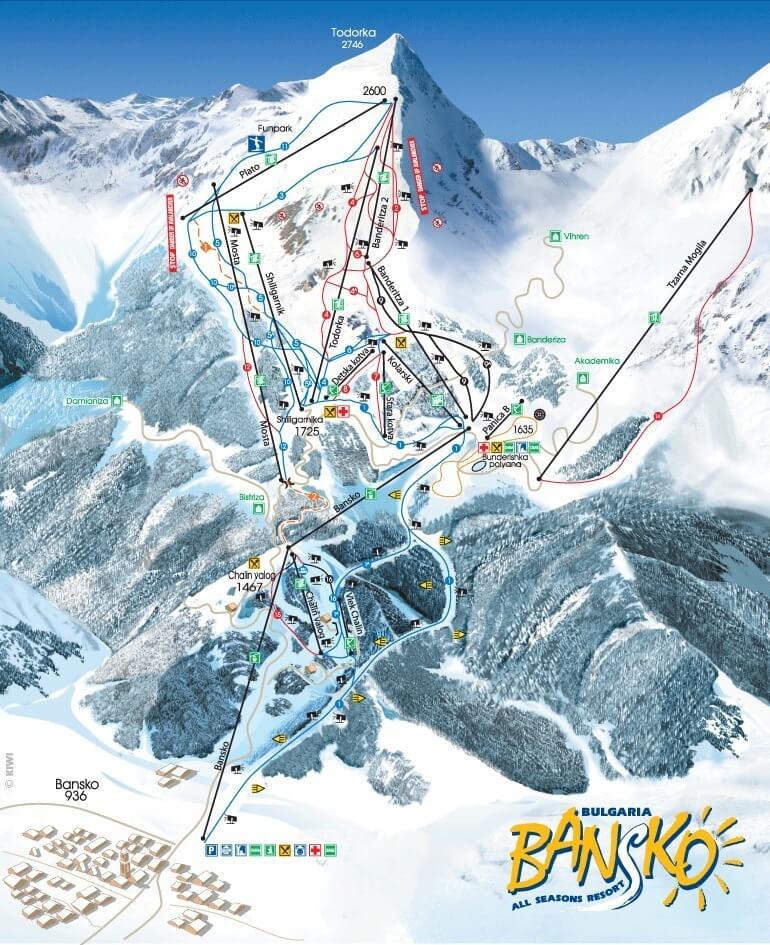
Bansko’s ski area covers around 56km of piste served by 14 lifts, including a modern gondola linking the historic town to the mid-mountain and upper slopes. The area’s headline feature is the 16km run down from the top station, one of the longest continuous descents in Europe, taking in a genuine variety of terrain and gradient over its length. The gondola significantly cut journey times up the mountain compared with the older lift infrastructure it replaced, and remains the main artery for most visitors moving between the town and the slopes.
The ski area is fairly compact and easy to get to grips with compared with the sprawling networks of the Alps, making it a manageable choice for a first visit to Eastern European skiing, with most of the mountain reachable within a day or two of arrival.
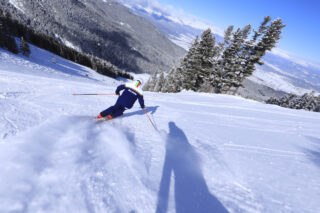
Beginners have gentle nursery slopes near the mid-station, with a good ski school infrastructure to match. Intermediates will enjoy the bulk of Bansko’s terrain, including long, well-groomed cruising runs and, of course, the famous 16km descent to the town.
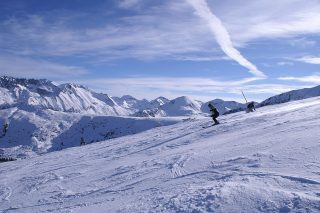
Advanced skiers have fewer options for genuinely steep or technical terrain than at major Alpine resorts, though the upper mountain does offer some steeper pitches and the length of the longest run gives a satisfying, sustained challenge in its own right.
Bansko benefits from around 70% snowmaking coverage, helping ensure reliable conditions through its December to April season even when natural snowfall is inconsistent. January and February typically offer the most reliable natural snow and coldest temperatures, while March can bring a good mix of spring sunshine and decent cover on the upper slopes. Because natural snowfall can be inconsistent at this latitude and altitude, checking recent conditions before finalising travel dates is worthwhile, particularly for visitors planning a trip several months ahead.
Bansko remains one of Europe’s better-value ski destinations, with lift passes, lessons, equipment hire and dining all considerably cheaper than equivalent Alpine resorts. This affordability, combined with modern lift infrastructure, is a large part of the resort’s continued appeal. Multi-day and season passes generally offer better value than single-day tickets, and package deals combining lift passes with lessons and equipment hire are widely available through UK tour operators.
Ski and snowboard schools in Bansko offer English-language instruction at prices well below the Alpine norm, and rental shops throughout the town and base area cover equipment for all levels at similarly affordable rates, from complete beginners to skiers wanting to tackle the resort’s longer runs.
Bansko has a huge range of accommodation built up during its 2000s development boom, from budget guesthouses to modern four- and five-star hotels with spas, most within easy reach of the gondola station in the old town. Prices remain considerably lower than for equivalent standards in the Alps. Booking well ahead is advisable during the busy Christmas, New Year and February half-term periods, when demand from UK and other European tour operators is at its highest.
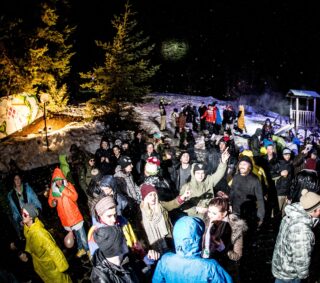
With around 100 restaurants and traditional mehana taverns, alongside a lively selection of bars, Bansko’s old town has one of the most extensive and affordable dining and après-ski scenes of any European ski resort. Expect hearty Bulgarian cuisine, live folk music in traditional mehanas, and a genuinely buzzing evening atmosphere in peak weeks. Prices for food and drink remain noticeably lower than at equivalent Alpine resorts, reinforcing Bansko’s reputation as one of Europe’s best-value ski destinations.
Bansko’s affordability and gentle beginner terrain make it a popular choice for families on a budget, with ski school options and a wide range of accommodation to suit groups. Beyond the slopes, the historic old town, with its cobbled streets, churches and traditional architecture, offers plenty to explore, and the surrounding Pirin National Park is a UNESCO World Heritage Site with dramatic mountain scenery.
Fly into Sofia, then transfer by road, a journey of around 170km and roughly two to two and a half hours depending on traffic and conditions. Shared shuttle buses, private transfers and hire cars are all commonly used, and direct flights from the UK to Sofia keep the overall journey time competitive with many Alpine resorts. A hire car is not essential given the availability of shuttle buses, though it does offer useful flexibility for exploring the wider Pirin region beyond the resort itself.
Bansko remains one of Europe’s best-value ski destinations, pairing modern lift infrastructure with a genuinely historic Bulgarian town and one of the continent’s longest runs. It won’t match the scale of the Alps, but for affordability, culture and a lively evening scene, it continues to punch well above its size. Its combination of low prices, a long, varied terrain highlight in the 16km run, and genuine old-town character keep it a popular choice for UK skiers on a budget.
Bansko covers around 56km of piste across 14 lifts, including a modern gondola linking the town to the mid-mountain and upper slopes.
Yes. Lift passes, lessons, equipment hire and dining are all considerably cheaper than at equivalent Alpine resorts.
Fly into Sofia, then transfer by road, around 170km and roughly two to two and a half hours.
The run from the top of the gondola down to the town stretches to around 16km, one of the longest continuous descents in Europe.
Get all the latest ski news, gear reviews, snow reports and unmissable features direct to you inbox with our weekly ski update.