
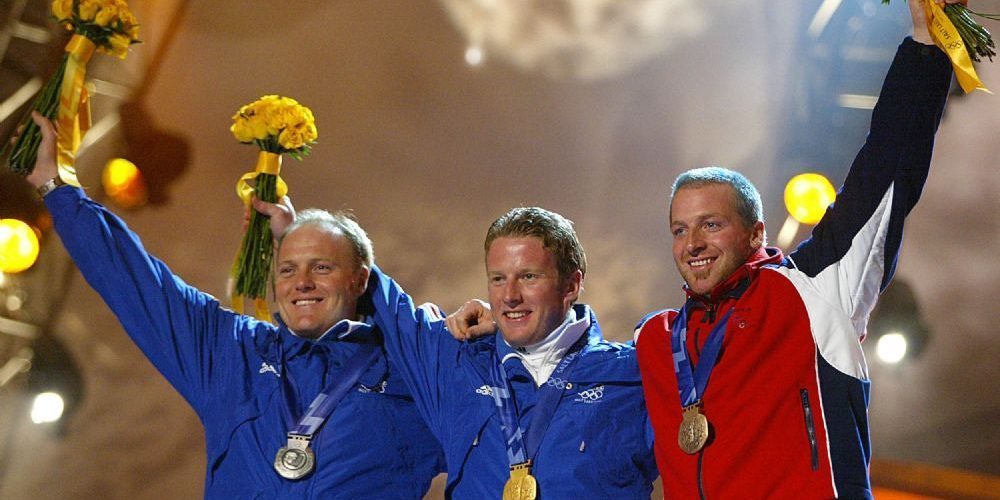
A grass roots campaign to have British ski racer Alain Baxter’s bronze medal, which he won at the Salt Lake City Olympics in 2002, returned to him, is gaining momentum.
Baxter’s bronze was the first ever Olympic snowsports medal won by a British skier or boarder and while Jenny Jones’ bronze at the current Sochi Olympics has delighted everyone, articles in the media, including the BBC, and statements from the head of Team GB that Jones’ medal is the first ever won by a British athlete, have revived annoyance in some areas of the ‘grassroots snowsports community’ who feel that history is being re-written.
12 years on social media and the possibility of creating online petitions have allowed Baxter’s supporters to vent their frustration at what they feel is an unfair situation and galvanise support.
Baxter’s bronze medal was taken off him when he failed a post race drugs test after his slalom success in Utah. It was quickly established that he failed because he had bought an over-the-counter Vick’s inhaler in America which included the banned substance levomethamphetamine.
British Vicks Inhalers do not include levomethamphetamine and Baxter had unfortunately not realised there would be a difference. In any event levomethamphetamine has been shown to have zero performance enhancing qualities.
Baxter backed by the (then) British Ski and Snowboard Federation appealed to the Court of Arbitration in Sport who overturned a ban placed on Baxter’s future competing.
The British Olympic Association then appealed for the medal to be returned at the Court of Arbitration in Sport in Lausanne, Switzerland but lost the appeal on the grounds of ‘strict liability’ – the essence of which is that even accepting Baxter’s argument was correct, he was still liable and should have known better.
Some reports have suggested that double standards at play with some higher profile international athletes who won their cases in similar circumstances to Baxter having their medals returned, while Baxter’s was not.
On Baxter’s Wikipedia page it states that the Court of Arbitration in Sport followed the view of a Dr Dr Don Catlin who argued the medal should not be returned. The Wikipedia page states, “Dr. Catlin was named as part of a three man committee that routinely allowed U.S. Olympians such as Carl Lewis to continue competing despite failing drugs tests,” giving a report in the Scotsman newspaper entitled, ‘Puzzling Tale of US’s Toping Appeals Impacts on Baxter’ which was published on 27th April, 2003, as a source.
Baxter, whose parents were both British Ski Team members, and named him after the 70s French skiing star Alain Penz, joined the British Alpine Ski Team aged 16 in 1991 and worked his way through the world rankings, first making the top 100 in time for the 1998 Nagano Winter Olympics.
Among his other achievements, Baxter won the BBC TV Show Superstars in 2005
An online petition for Baxter’s medal to be returned which was launched yesterday had 1,715 signatures at time of writing.
An online petition for Baxter’s medal to be returned which was launched yesterday had 1,715 signatures at time of writing.