Accommodation
About Mont Tremblant
- Altitude: 230m
- Total Lifts: 14
- Pisted Area: 102 trailskm
- Average Snowfall: 452
Recent News From Mont Tremblant
Quick answer: Mont Tremblant suits families, intermediates, and anyone wanting a genuinely charming, colourful pedestrian village with a distinctly French-Canadian atmosphere within easy reach of Montreal. It is less suited to those chasing huge vertical or expert terrain on the scale of the Rockies, since Tremblant is a relatively compact mountain best suited to a few relaxed days.
Quick resort facts
Ski area: Mont Tremblant, 102 trails, 14 lifts · Altitude: 230m base · Season: mid-November to mid-April · Nearest airport: Montreal-Dorval (129km) · Average annual snowfall: 452cm
Best For / Not For
Best for: families, intermediates, and anyone wanting a genuinely charming, colourful pedestrian village with a distinctly French-Canadian atmosphere within easy reach of Montreal.
Not for: those chasing huge vertical or expert terrain on the scale of the Rockies. Tremblant is a relatively compact mountain best suited to a few relaxed days rather than a terrain-hungry week.
Overview
Mont Tremblant sits in Quebec’s Laurentian Mountains, around 130km from Montreal, and is the largest and best-known ski resort in eastern Canada. Owned by Alterra Mountain Company and a founding partner of the Ikon Pass, it is known above all for its pedestrian village, a colourful, European-inspired collection of shops, restaurants and hotels built directly at the base of the slopes. The resort dates back to the 1930s and has grown steadily since Intrawest’s redevelopment of the village in the 1990s, transforming it into the polished, car-free base area visitors see today.
Jump to: Ski Area · Skiing by Ability · Snow & Best Time to Go · Lift Passes · Getting There · FAQs
The resort’s French-Canadian culture, distinct from the Rockies further west, gives Tremblant a genuinely different flavour, with a strong culinary scene and a village atmosphere that feels closer to a small European resort than a typical North American base area. Bilingual service is standard throughout the resort, and menus, signage and entertainment lean noticeably more French than at resorts further west in the Rockies.
The Ski Area
Mont Tremblant covers around 630 acres across 102 trails, split roughly 22% easy, 42% more difficult, 34% difficult and 15% extreme (with some overlap in Wikipedia’s published figures reflecting sub-categories). The base sits at 230m (755ft), rising to 875m (2,871ft) at the summit, a vertical drop of 645m (2,116ft). The resort is served by 14 lifts including two gondolas, and the longest run, Nansen, stretches 6km (4 miles). Average annual snowfall is 452cm (178 inches), with snowmaking covering 71% of terrain. While modest in scale compared with the giants of western Canada, the resort’s compact size makes it easy to cover most of the mountain within a few days.
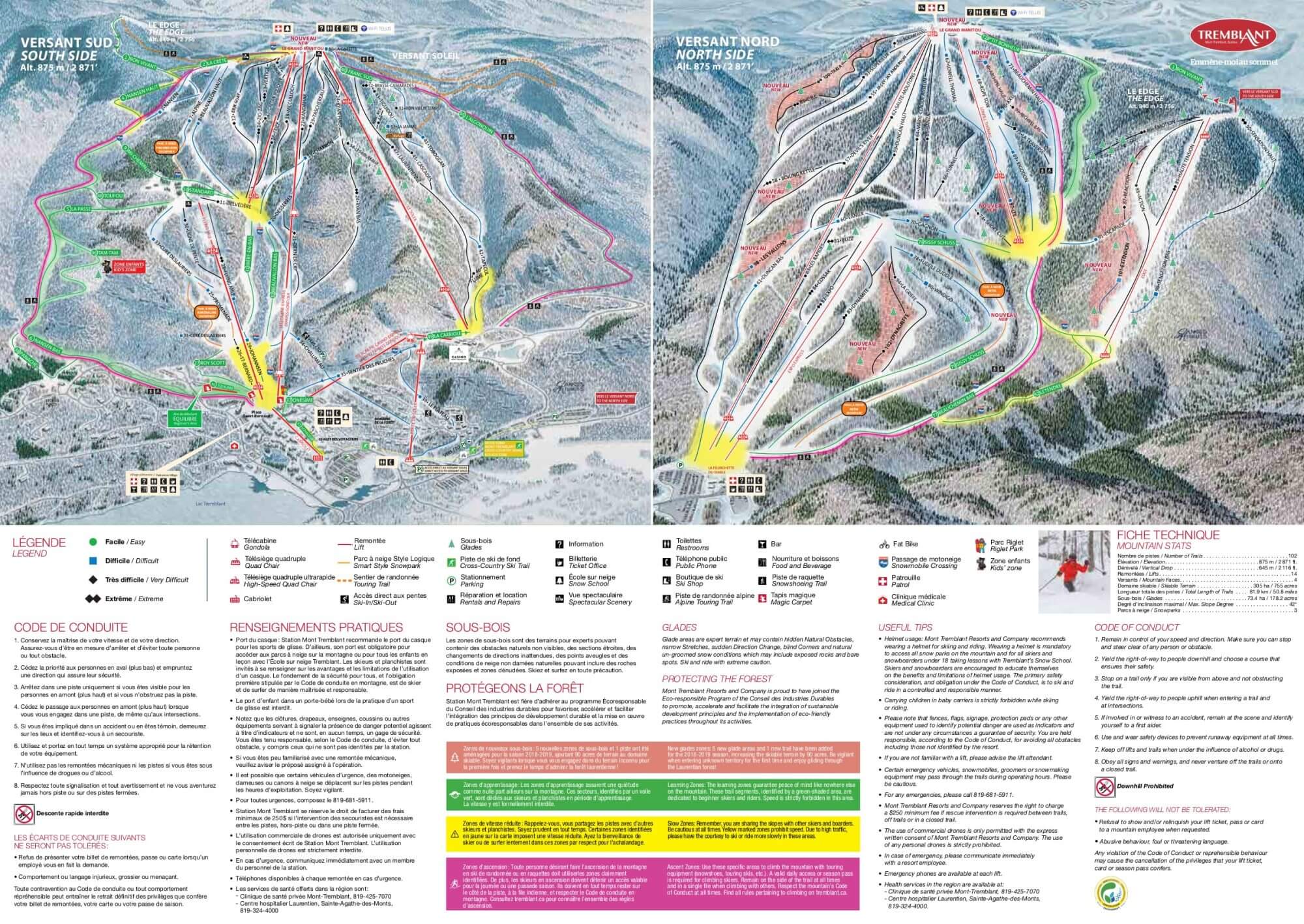
The mountain is split across north, south and west-facing sides, each with a noticeably different character and microclimate, giving visitors a reason to explore all sides of the mountain rather than sticking to one face. Skiing across all three sides in a single day, chasing sun or shelter depending on conditions, is one of the more distinctive features of a Tremblant visit.
Skiing by Ability
Beginners
The lower mountain and south side both offer gentle, well-groomed learning terrain close to the village, making it easy for beginners to get in and out of lessons. Ski school meeting points are within easy walking distance of most village accommodation, minimising the usual first-morning hassle of getting young beginners to their lesson.
Intermediates
With 42% of terrain rated more difficult, Tremblant offers plenty of enjoyable cruising across its various faces, particularly on the sheltered north side in colder weather. Longer green and blue runs threading down from the summit give intermediates satisfying full-mountain descents rather than short, repetitive laps.
Advanced & Expert
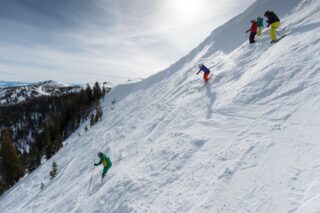
The resort’s steeper, mogul-covered runs are concentrated on the upper mountain, giving stronger skiers a genuine, if relatively compact, challenge by North American standards. Runs such as those on the Expo and Edge sectors are well known locally for their bumps, and are best tackled earlier in the day before they soften.
Snow Reliability & Best Time to Go
Mont Tremblant averages 452cm (178 inches) of snow a year, backed by snowmaking across 71% of the mountain. December and January bring the coldest, most reliable conditions, while February and March are popular for combining good snow with the lively atmosphere of the village. Extensive snowmaking means the resort can maintain reliable cover through the core December to March season even in leaner natural snow years.
Lift Passes
Mont Tremblant is a founding resort on the Ikon Pass and Ikon Base Pass, alongside standalone lift tickets. Booking online ahead of travel brings savings over walk-up prices. Ikon Pass holders should note that Base Pass options carry blackout dates during peak weeks, so it’s worth checking access before booking a trip around Christmas or February half-term.
Ski School & Ski Hire
Tremblant’s ski and snowboard school runs extensive group and private lessons, with well-regarded children’s programmes based in the pedestrian village. Rental shops are widely available throughout the village. Multi-day lesson and rental packages are generally better value than booking separately, particularly for families staying a week or more.
Accommodation
The pedestrian village offers genuine ski-in ski-out convenience, with a huge range of hotels, condos and restaurants built directly into its colourful, car-free streets, widely regarded as one of the best base areas in North American skiing. Prices vary considerably by proximity to the main pedestrian square, with quieter, better-value options a short walk or free shuttle ride further out.
Food & Après-Ski
Tremblant’s French-Canadian culinary influence gives the village a genuinely strong dining scene, alongside a lively, family-friendly après-ski atmosphere centred on the pedestrianised main square. Live music and fire pits are a regular feature of village evenings, giving Tremblant a livelier social scene after dark than many quieter Canadian resorts.
Families & Non-Ski Activities
Beyond skiing, Tremblant offers an Aquaclub water park, ice skating, dog sledding and a lively village atmosphere that keeps non-skiers thoroughly entertained throughout a stay. The resort’s Aquaclub Scandinave-style spa facilities and extensive activity roster make it a genuinely strong choice for mixed groups of skiers and non-skiers.
Getting There from the UK
Most UK visitors fly into Montreal-Trudeau International Airport and drive around two hours north to Mont Tremblant, making it one of the more accessible major Canadian resorts from the UK. Direct flights from London to Montreal keep journey times relatively short, and shuttle transfers to the resort are also widely available as an alternative to hiring a car.
Practical Checklist
- Book an Ikon Pass or advance lift tickets before travelling to save on walk-up prices.
- Explore all sides of the mountain, as each has a distinct character and microclimate.
- Book village restaurants ahead during Christmas and February half-term weeks.
- Allow around two hours’ driving time from Montreal-Trudeau International Airport.
- Bring French phrases if you can. Quebec’s French-Canadian culture is a genuine part of the experience.
Pros & Cons
| Pros | Cons |
|---|---|
| One of the best pedestrian villages in North American skiing | Relatively modest vertical drop and terrain by Rockies standards |
| Distinct, charming French-Canadian culture and dining | Less natural snow than western Canadian resorts |
| Reasonably convenient transfer from Montreal | Can get busy in the pedestrian village during peak weeks |
| Excellent family and non-ski activities in the village | Limited true expert terrain compared with the Rockies |
InTheSnow Verdict
Mont Tremblant offers something genuinely different among major North American resorts: a charming, colourful pedestrian village steeped in French-Canadian culture, within relatively easy reach of Montreal. It won’t match the Rockies for scale or vertical, but for families and intermediates wanting a relaxed, characterful ski holiday with excellent dining and village life, Tremblant is hard to beat in eastern Canada. Add in reliable snowmaking, an Ikon Pass affiliation and one of the liveliest village atmospheres in Canadian skiing, and it’s easy to see why Tremblant remains eastern Canada’s flagship resort.
FAQs
Is Mont Tremblant good for beginners?
Yes, the lower mountain and south side both offer gentle, well-groomed learning terrain close to the pedestrian village.
How do I get to Mont Tremblant from the UK?
Fly to Montreal-Trudeau International Airport and drive around two hours north to the resort.
What lift pass covers Mont Tremblant?
Mont Tremblant is a founding resort on the Ikon Pass and Ikon Base Pass, operated by Alterra Mountain Company.
How far is Mont Tremblant from Montreal?
Around 130km, roughly a two-hour drive, making it one of the more accessible major Canadian resorts.
How much snow does Mont Tremblant get?
The resort averages around 452cm (178 inches) of snowfall a year, with snowmaking covering 71% of terrain.
Useful Official Links
Mont Tremblant Piste Map
Lorem Ipsum is simply dummy text of the printing and typesetting industry. Lorem Ipsum has been the industry's standard dummy text
Get exclusive updates and offers!
Get all the latest ski news, gear reviews, snow reports and unmissable features direct to you inbox with our weekly ski update.