Accommodation

Portillo is Chile’s original ski resort and one of South America’s most historic, hosting the 1966 Alpine World Ski Championships and offering some of the toughest skiing in the Southern Hemisphere alongside easier groomed slopes. Centred on a single huge hotel complex with a legendary one-employee-per-guest service ratio, it suits intermediate-to-advanced skiers and powder hunters drawn by an average annual snowfall of 7.4 metres and views of Aconcagua, the Western Hemisphere’s highest peak.
Best for: advanced and expert skiers, powder hunters and anyone drawn to skiing history, heliskiing or the novelty of a single, legendary hotel resort deep in the Andes.
Not for: those wanting a large piste network, varied accommodation options or a lively resort village. Portillo is small and remote by design, built around one hotel rather than a conventional town.
Portillo sits high in the Chilean Andes around 160km from Santiago, close to the Argentine border, and holds a unique place in ski history as the host of the 1966 Alpine World Ski Championships. The entire resort is centred on one striking yellow hotel beside the turquoise waters of the Laguna del Inca, with a famously personal one-employee-per-guest service ratio that regular visitors return for year after year. The hotel itself has hosted royalty, Hollywood stars and world champion ski racers over its history, and its old-world, slightly time-capsule atmosphere is as much a part of the appeal as the skiing.
Jump to: Ski Area · Skiing by Ability · Snow & Best Time to Go · Lift Passes · Getting There · FAQs
Portillo is also well known as a pre-season training base for national ski teams from around the world, who use its steep, reliable terrain to prepare for the Northern Hemisphere winter, giving the resort an unusually serious, ski-racing pedigree for its size.
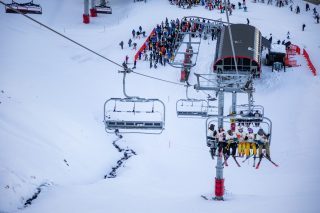
Portillo covers 22km of piste from a base of 2,560m, served by 12 lifts, five chairlifts and seven drag lifts, including distinctive “va-et-vient” style lifts designed to carry skiers up steep, avalanche-prone slopes safely. The terrain is compact compared with major Alpine resorts, but its steep couloirs, bowls and off-piste terrain punch well above their size for experienced skiers. Because there is no surrounding village, virtually all skiing happens directly from the hotel, and with strict limits on daily visitor numbers, the slopes rarely feel crowded even during peak weeks.
Dramatic views of Aconcagua, the Western Hemisphere’s highest peak, are a constant backdrop, and the lack of a conventional village means skiing here feels genuinely remote and focused, without the distractions of a larger resort town.
Portillo offers easy, groomed slopes suitable for beginners, though the resort’s reputation is built on more challenging terrain, so first-timers may find the overall atmosphere geared more towards experienced skiers.
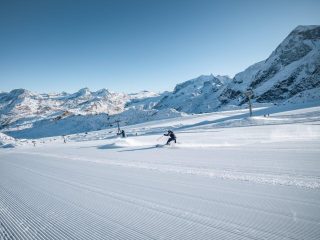
A good range of intermediate groomed slopes gives confident skiers plenty to enjoy, with long, uncrowded cruising runs benefiting from the resort’s famously low visitor numbers.
Portillo is known for some of the toughest skiing in the Southern Hemisphere, with steep couloirs and challenging terrain that has made it a long-standing favourite for serious skiers and racers, including national ski teams during pre-season training.
Heliskiing is available at Portillo, opening up remote Andean terrain beyond the lift network for those seeking the ultimate powder experience away from the marked pistes.
Portillo averages 7.4m (762cm) of snow a year, among the highest totals in South America, typically arriving in large, fast-hitting Andean storms rather than steady daily falls. June and July often bring the biggest storms, while August and September provide a good balance of settled weather and still-strong snow cover for visitors travelling from the UK during the Northern Hemisphere summer. Storm cycles can also bring short periods of lift closures for safety, so building some flexibility into a trip itinerary is worthwhile.
Lift tickets are typically included as part of Portillo’s all-inclusive hotel packages, though day tickets are also available for visitors not staying at the resort.
Portillo’s ski school offers group and private lessons for all abilities, with a strong reputation for coaching stronger skiers given the resort’s history as a national team training base. Rental equipment is available on site at the hotel complex.
Almost all visitors stay at the Hotel Portillo itself, a single large, all-inclusive complex that is effectively the entire resort, along with a small number of adjoining annexes and lodges. This makes booking simple but means there is little choice or flexibility compared with a conventional ski town, and rooms should be booked well in advance for peak weeks. Room categories range from simple lodge-style options to lake-view suites, with rates generally including meals, some lift access and access to the hotel’s other facilities.
Dining is centred entirely on the hotel’s all-inclusive restaurants, with a relaxed, sociable atmosphere shaped by the resort’s small size and high staff-to-guest ratio. Formal evening dinners and a lively bar scene within the hotel make up for the lack of any wider village nightlife.
Portillo suits families comfortable with a self-contained resort rather than a bustling village, with the hotel offering a pool, spa and organised activities. The dramatic lakeside and mountain setting also makes it a memorable destination for non-skiers happy to relax at the hotel while others ski. Guided excursions, ice skating on the lake in colder spells, and the sheer novelty of the setting help fill time for anyone not skiing every day.
Most UK visitors fly into Santiago, usually via a connecting hub, and take a transfer of around two to three hours up into the Andes to reach Portillo. The drive itself, climbing the famous switchbacks of the Los Caracoles pass towards the Argentine border, is considered part of the experience. Given the altitude and long transfer, building in a night in Santiago either side of the trip is worth considering to help with acclimatisation and onward flight connections.
Portillo is unlike anywhere else in this guide: a single legendary hotel beside a turquoise Andean lake, with a ski racing pedigree and storm-driven powder that punches far above its modest piste count. It won’t suit skiers wanting a big piste network or lively village life, but for advanced skiers and history lovers wanting a genuinely unique South American ski trip, Portillo is unforgettable.
Portillo does offer some easy, groomed slopes, but the resort’s small size, remote setting and reputation for serious terrain mean it suits confident intermediates and above better than complete beginners.
Most UK visitors fly into Santiago and take a transfer of around two to three hours up into the Andes, climbing the switchback road towards the Argentine border to reach the resort.
Portillo averages 7.4m (762cm) of snow a year, among the highest totals in South America, typically arriving in large, fast-hitting Andean storms.
Yes, heliskiing is available at Portillo, giving experienced skiers access to remote Andean terrain well beyond the resort’s lift network.
Get all the latest ski news, gear reviews, snow reports and unmissable features direct to you inbox with our weekly ski update.